Showing posts with label 2010. Show all posts

Thursday, 2 August 2012

Another Year - Mike Leigh (2010)

Mike Leigh is an actors' director. Gary Oldman (again) worked with him in Meantime (1983) and it seems as if his way of directing and working with actors influenced him in the making of Nil by Mouth : rehearsing until actors become their character and bond in a natural way.

I have to say I was a little scared when I read reviews of Another Year: "the life of a middle-aged middle-class couple and their friends and family through four seasons". Part of me thought: typical middle-class family drama. It is.. and it isn't.

Tom and Gerri are the happy middle-aged couple are who we all would like to be when we grow up: living a comfortable life, having a succesful professional life, extremely tranquil marriage with a loving grown-up professional son. The film isn't about them though, it's about the others, the people whose lives are closer to what real life is about.

There's this character... Mary. She is the main story in the film: single fourty-something who is very unhappy but wants to tell herself she isn't, so she can't really improve her life is she can't face it. She is so pathetic we hate her at times... but she's so human that we end up feeling sorry for her. If Tom an Gerri are our ideal selves, Mary is our worst nightmare.

One major achievement in this film is that it's full of dialogue, people talk all the time, but nobody says a line regarding what's really happening. That's not how the story is told. There's thinking and feeling involved in understanding and reconstructing the storyline. There's traditional narrative storytelling, there's "independent" non-narrative storytelling... and there's Mike Leigh.

The visual aspects of the film are all very stylish and well achieved. Tom and Gerri's house represents not just them, but their happiness and that ideal world. Still, the main strength are the actors. There's not one of them who gives a bad performance (I thought the son's new girlfriend was a bit over the top, she wants to be charming but she ends up being a bit annoying... I didn't really like her). Leslie Malville who plays Mary is  great, so is Ruth Sheen who plays Gerri... but my favourite was Jim Broadbent, maybe because he plays an ideal man. Imelda Stauton is in two scenes... but she never leaves. I think you might forget her at first, but she when you think back she represents Mary and us, finally looking for a way out. We would like a new life, but the only thing we have is try to begin sorting out the one we have.

Another Year is a human drama, but is also a performing lesson and a storytelling master class.

Another Year

Saturday, 2 June 2012

Cave of Forgotten Dreams - Werner Herzog (2010)

How does Herzog finds such interesting characters? I feel I have written this before. He does it again in this film. 

I was a little disturbed. I still can't imagine thousands and thousands of years... and how humans managed to have survived that long. It's mind-blowing how some paintings in this cave were done thousands of years apart and are still well preserved. It's also amazing how it took them so long to discover this cave (fortunately!)

The people Herzog meets are always fascinating, the former circus artist geologist? The perfumer sniffing the cave?! The playing the flute dressed in fur?! 

The sound could have been better... the eerie place needed eerier sounds, not so much music, the cave needed a voice and an ambience. 

Lots of links:

Details of production and reviews on Herzog's website

Very very interesting interview with Herzog's Bavarian accent talking about Science and Art

The article that made Herzog want to make this documentary

Cave of Forgotten Dreams

Sunday, 15 April 2012

Carancho - Pablo Trapero (2010)

I like this film. I like it because it makes me think that Argentinian cinema can indeed create good things. I like the way it's filmed, the camera and the photography... the sound is alright too.

Not long before Carancho was released, El secreto de sus ojos was a huge hit, Oscar included. A film about a troubled policeman, haunted by an old love at the same time that someone dies and he has a new case to investigate. The story develops into the old love affair (rather boring too) and ends up forgetting about the girl who died in the hands of a psychopath. But it doesn't matter, because her husband is taken care of it by finding the killer himself and torturing him to the end of their days. I remember having trouble putting into words why I hated the film... until someone commented he hated it because of how it's acceptable to take hand in their own justice. That was it, mixing things, trying to make a film about justice and love and failing to do both. (Someone else I know thinks that the film is also saying is that there is no point in fighting lost causes, which is very discouraging). 

Carancho has a troubled character too, in this case a thieving lawyer. And he falls in love, so badly that he decides to finally start doing things right and improve his life. He has feelings, he is human. She is a doctor hooked on drugs. They are a couple that work in the same rotten world where life is at the edge, always. But they are right for each other. It is clearly a film about love. The context is bleak and their story might be hopeless but they are real people with real feelings, with actual difficulties to live their lives. Life has more meaning in this film. So does love. The ending might have a little too many twists, but you can't say it doesn't make sense. It's well written. Even though they share the main actor, it is a world apart from El secreto de sus ojos and a much better film.


Carancho

Wednesday, 28 March 2012

The Robber - Benjamin Heisenberg (2010)

The Robber isn't a bad film. But it isn't a great one either. It's a film about someone who runs and robs. You don't know much about him or why he does the things he does. You can infer that he gets a kick out of the adrenaline rush. But that's all. It's a film with a main character that you don't get to know. That's fair enough but it makes a poor film because you don't engage in his story. You don't empathise. You don't even dislike him. There's no emotion involved, just you sitting there wanting to see how the story ends. In my terms, that's not what cinema is about.

The photography is correct, nothing outstanding. To be honest the camera from his point of view doesn't really work too well (at least not for me).

The sound. I don't really understand why in every car there is music. Every single one of them. No matter what the music is or if it's well chosen, that's not a good use of sound. There are quiet moments.. but I think trying to convey feelings mainly through music only is just too easy. Particularly because you still don't know how he feels. 

Der Räuber

Friday, 23 March 2012

Balada triste de trompeta - Álex de la Iglesia (2010)

The title of this film explains what the thing is about: Spain, from the Civil War to the times just before the end of Franco. It takes the title from a very popular song from a very popular singer/actor. I think this film is full of such references that are often missed. But that's what I liked the most about it. You could put them together with Distant Voices... in terms on how well they are true to their own social environment, even without trying.

It is a bold film. It's violent at times, over the top at others.. but again, he fiction characters are fiction... the context is real and that's the scariest thing of all.

Visually it's quite an impressive film. The art department did a great job, everything is very stylish. The sound is okay. Right now I can't remember the dubbing ruining everything, but I might have forgotten.

If dubbing is the tragic flaw of Spanish cinema, certainly actors are its strength. A film that has surreal moments needs to engage with the human side and most actor capture that from their characters. Santiago Segura is in the film for not more than 20 minutes and you would say he stays in it for the rest of the film.

The first scene was my favourite. A circus show is interrupted by the war. A child is left alone on stage while a lion walks in from the darkness. It's such an eerie moment, the atmosphere is so expressive... it's also a metaphor of what's going to happen.

Balada triste de trompeta

Tuesday, 21 February 2012

Happy People: A year in the Taiga - D. Vasyukov / W. Herzog (2010)

This is not an entirely Herzog documentary. It's very beautiful to watch, very interesting, well done... I think the human side is very much Herzog's influence. It's the story of simple people, hardworking all year around. It's well structured too. I think the problem with it is the dubbing. Perhaps it was the version I saw that had voice over every interviewee. I think dubbing is just wrong, but in this case it was terrible. In such an intimate film about people you need to hear their real voices, empathise with them, identify the way they sound... it didn't happen and it was a shame.

Nicely done interesting documentary, dubbing hurted it though.

Friday, 17 February 2012

True Grit - Ethan & Joel Coen (2010)

I always thought the Coen brothers could really do genre films. I'm not a fan of his comedies but I do like their thrillers. This is a western. And they have really been true to the genre, still keeping their own personal touch.

I liked this film, I just don't know what to write about it. Jeff Bridges was good once again, the girl was good... I don't like MAtt Damon but he wasn't too annoying. The photography was ok, the sound was ok  - nothing impressive... the use of landscape was good. 

True Grit is entertaining, a true western and very well done

True Grit

Monday, 26 December 2011

Separado! - Dylan Goch/Gruff Rhys (2010)

Music documentaries can get a little boring and empty of content. Not always, but mostly. If it tries to be psychedelic... well it can get pretentious too (perhaps it worked in the 70s). This is different though.

It's a road-movie music documentary, it's fun, it's amusing and very well structured. The more trippy sequences are well achieved, they aren't overdone at all... the real life part sometimes seem more psychedelic! It also surprised me the amount of fluent Welsh speakers in Patagonia, I wouldn't have thought there were so many of them. One thing that is not minor is that it doesn't avoid historical events that needed at least mentioning.

It is well filmed and well edited. Apparently they did have a lot of footage to work through, so it makes it an even better job. The motion-graphics as very nice too.

My favourite scenes: Brazilean musician introducing "Chiffy!" and the 'gigs' for the Welsh speaking people (who were probably expecting something traditional) with old ladies covering their ears

Separado!

Monday, 14 November 2011

El mal ajeno - Oskar Santos (2010)

If you take a look at this blog you can possibly guess I like French and Russian films. And British. But if there's one country you could say I have seen a lot from, that is Spain. I have since most of the ones released in the 90s, and many from the 80s and 00s.

Eduardo Noriega isn't just a handsome actor, he can be a very  good actor too. He can play characters that are different from each other. In this film... he's ok. He does the best he can with the script he's got. It bothers me a lot how they tried to aged him more and it just doesn't work. This doctor is about his age, but simply doesn't look as old and worn out as he should.

So what is this film? Is it a thriller? Is it a drama? Is it a tragedy? Is it a fantasy film?! It certainly has elements of everything. It begins as a drama and slowly develops to a thriller with fantasy elements... and you could say the ending is a bit in the Greek tragedy area: will he choose his life and the life of his patients OR the life of all of his loved ones? But it doesn't really choose a genre and develops it efficiently. It's not an author film either! Perhaps it's trying to copy an Amenábar sort of style.

All the technical aspects are very good. The photography is great, stylish, nice to watch. The art is clean and stylish...again (except for how bad it tries to make a young looking actor look old and how healthy most patients look!). The sound is correct, nothing espectacular in terms of design but still well done. The music is meassured, not overused.

Still. How can a film that has everything for one to like it a lot.. still  leaves you feeling so... unimpressed? I think the screenplay might have something to do with it. If only something had engaged us during most of the film we would have been more excited at the end. It's not a bad film, it just lacks a soul.

El mal ajeno

My afternoons with Margueritte - Jean Becker (2010)

What does this still say?

A big overweight Frenchman sits in a park with an adorable old lady, surrounded by pidgeons. We can already sense he's not very bright and she's very distinguished. They read and develop a friendship that would change them both.

That's it. That's the film.If you expect a small feel-good French film, that's what it is. Nicely acted - Depardieu is meassured, unlike the also not very bright Quentin from Tas-toi!, his character is likeable (to me he now seems a little dodgy after his plane incident). Correctly filmed. Nothing more than that.

Also, it isn't excessively sweetened or full of unrealistic hopes. Sometimes we need films like this to pass the time.

La tête en friche

Monday, 7 November 2011

The King Speech - Interview with Sound Mixer John Midgley

I already wrote an entry about it, but this is a very interesting video, especially because he talks about the way he worked for the film. It seems to me that sound mixers always have the same role and problems: fighting unwanted noises and the crew that creates it. It's comforting that it happens to big budget important sound mixers too.

(I wish they had use less of that little music for the interview... it really gets on my nerves).

Taken from here 


SoundWorks Collection: The Sound of "The King's Speech" from Michael Coleman on Vimeo.

Saturday, 29 October 2011

Des hommes et des dieux - Xavier Beauvois (2010)


Can I be objective about French films? Possibly no. That said, this is a very good film.

The photography is impeccable. It captures both the geography, the light and the story. Beautiful.

I have to say I didn't know much about the story, which helped. I didn't know it was based on a true story and what happened. I still thought it was well paced, it goes well with what it's talking about. Still, it's a 122 minutes film and it didn't feel long at all. I thought it kept going and moving on. I read a few reviews that say it can be slow at times. To me it wasn't. I saw it in one night, I didn't fall asleep even when I was tired.. that surely says something.

The cast is very good in their characters: they are monks, they don't play caricatures of monks. I  think it's a film about determination and it's very well portrayed, not forced in any way. It's not a religious film, it's more a story about humanity and tolerance, and that's what makes it universal.

Sadly, there's not much to say about the sound. Correct. Fits the story. Nothing extraordinary.


Des hommes et des dieux

Monday, 17 October 2011

Las marimbas del infierno - J. Hernández Cordón (2010)

What to say about this film. It's short and maybe it has an extra 10 mins. I have to confess it took me a few attempts to finish it (but I must have been tired).

The story is original... what I liked the most was that it is fiction but it looks like documentary and you aren't quite sure when it's being what. The photography is simple yet nicely done. Also, it's always nice when you get to see a film from a country you don't normally see films from.

But I didn't love it. Perhaps it needed a little more charm. I read things about it and most mentioned "Jim Jarmusch sense of humour". Perhaps that's what I didn't get.

Las marimbas del infierno

Wednesday, 12 October 2011

The King's Speech - Tom Hopper (2010)


I rewatched this one, because I had completely forgotten what I thought about it the firt time. I think I enjoyed it more.

I still think it's an interesting film. Geoffrey Rush is always good. Colin Firth was surprisingly good. I think he does manage to not make a caricature of a stammerer and portray a man who is suffering a lot with his condition. Helena Bonham Carter I think sounds a bit too Lady Tottington which is a bit too much in comparison with Firth's simple performance.

It is very much a film about a man who suffers. It should be a drama.. instead it's a little too sweetened. I blame the music. It's just all over the place, too 'regal', too... much of it. It's like when you have too much of a sweet thing until you can't taste it anymore and makes you sick. It needed more character, more dramaturgy. Possibly it's a fail in the overall sound design, rather than in the composer.

A film about a stammerer it's also perfect for sound. Yet, it's poor in that area. Except for a few moments (when he records his speech and doesn't listen until he gets home). The sound effects were technically very well done... they do help get the stammering effect (especially the first speech scene).

The editing. Some of the cuts bothered me, and that's never a good sign.

The photography is tidy. Correct. A bit too royal-drama-like, maybe? I disliked the use of great angulars, but that's a very personal mania.


So it's entertaining, I enjoyed it, I'd say it's good, but it's got little flaws that are a shame. Though to be fair you see the flaws in the second view, not the first. I engaged with his pain the first time, so that's always a positive thing.

Here's the original speech. He doesn't stammer as much, but let's say it's a cinematographic license to make the story flow better.


The King's Speech

Sunday, 9 October 2011

Winter's Bone - Debra Granik (2010)

The label "indie" makes me itchy. Particularly because it's a pretentious one to push up products as if it was a quality warranty. This film is full of that. It is.. okay. It's not a great film, it's not terribly bad. I think it got promotion just from the labels "independent", "sundance", "oscar"... 

It is done in a austere way. The cast is very natural (the girl is very good, that has to be said). The screenplay's... okay. Previsible? Maybe. It might be "indie" but it still has a "happy ending". What's very interesting about it is the way of showing yet another side of rural America. 

It's often said that David Lynch is the bad side of the American dream. This can be related to that in the sense that the countryside in America is  often portrayed as honourable, healthy, even naïve. This film shows that not everyone is like that, that the "real America" can also be sick and rotten. Drug addicts aren't just in urban areas and there are people in America that have to rely on hunting squirrels so they can have something to eat. I think that's the best I can rescue from this film. It tries to be a rough story that criticises something about society... with an upbeat ending.

I still have The Rain People in mind - or it has me, I don't know. Austere, simple, human film... yet superior in so many ways.

Winter's Bone 


Thursday, 29 September 2011

The Art of Russia - Andrew Graham-Dixon (2010)

I've spent the past three nights watching a BBC series on Russian Art. It was mind-blowing. I've become obsessed Russia and its art, so badly I want to go there even more than I wanted to go before. 


The series starts with the question about how to get to know Russia and its people and the answer being, through their art. So from early pagan representations it moves to the conversion to Christianism and its meaning in the idea of being Russian, to how the tsars used Art and how they spent money in it. The same art that help the nation together also started the revolutions. 

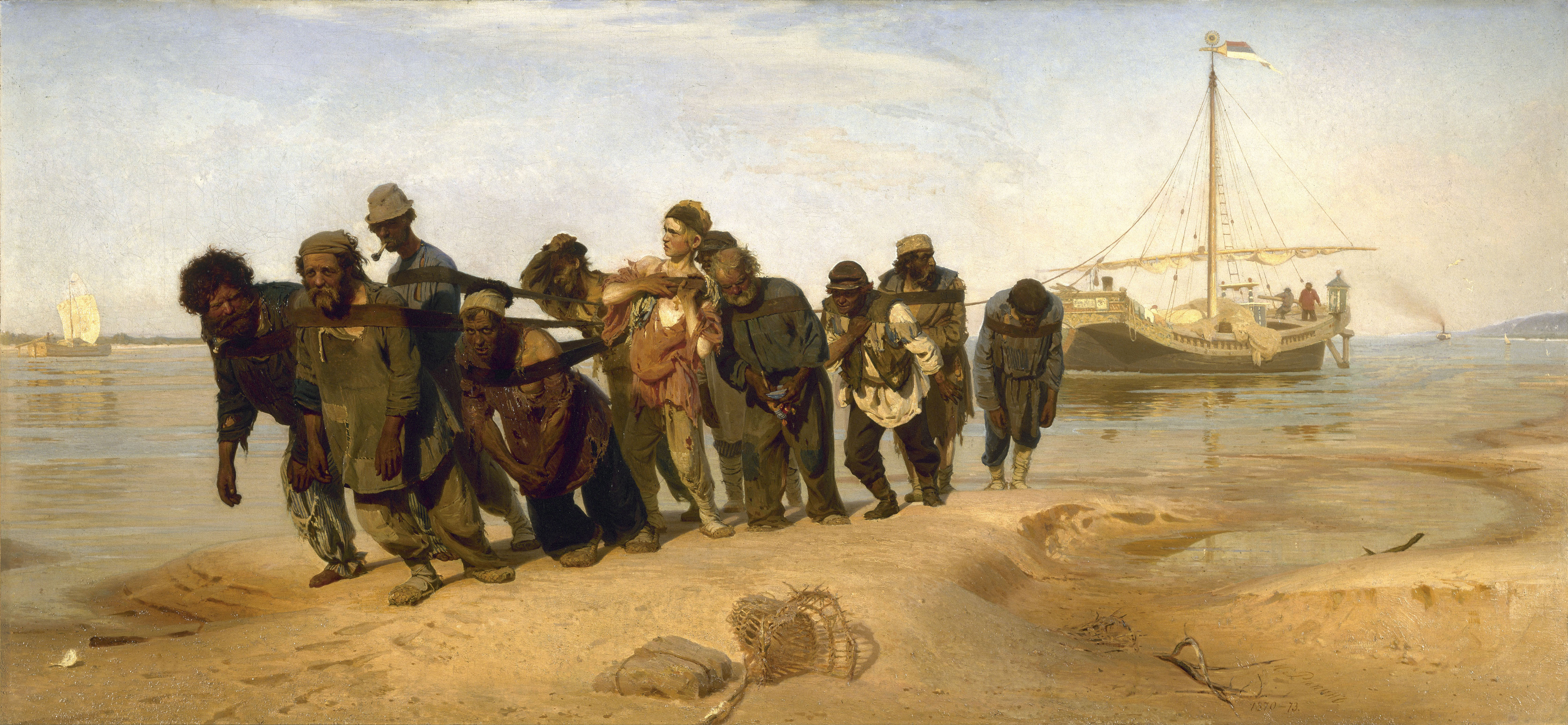
I've heard of Russian religious icons and Andrej Rublev but I haven't heard of The Wanderers Wow. 


One of the best thing about the series is how he explains art both passionately and thoroughly yet in a very simple and non-pretentious way.  He doesn't just take into account the technique or the beauty of it but the social context in which it was produced and what it means for its time. That's how Art shows should be made!

When he gets to the Revolution he also talks about films and the role of Art for the Party. And Eisenstein, of course. I'm a little disappointed he doesn't mention Dziga Vertov, just because of how creative, comitted and bold he was with his experiments.Shame he also talks very little about Kandinski.

The Constructivists' work was so interesting to discover and still so modern! He goes into a museum, well a back room inside an office where they keep some original material from Rodchenko-Maiakovski and he very excitedly says something that is true, how they were pioneers in advertising. The best works aren't online (because they are in those drawers).

Finally. How beautiful is Moscow's Metro! (and how unfair are the pictures on the internet) The money Stalin invested in making them revolutionary propaganda surely turned them into museums!


How do you end such an impressive series? Well he manages to take us to contemporary Russian art: confused, disenchanted, bleak... he really captures the spirit. So many centuries in only three hours are quite difficult to take in, so you can imagine living with such a heritage must be even more difficult.